The "Perfect" AI Document Crisis
We're drowning in AI documents that nobody reads. A 30-page strategy doc with "Phase 3" but no Phase 1 or 2 recently circulated—uncorrected. AI is enhancing good work, but exacerbating bad work. Here's how to fix your workflow before shipping another unread draft.

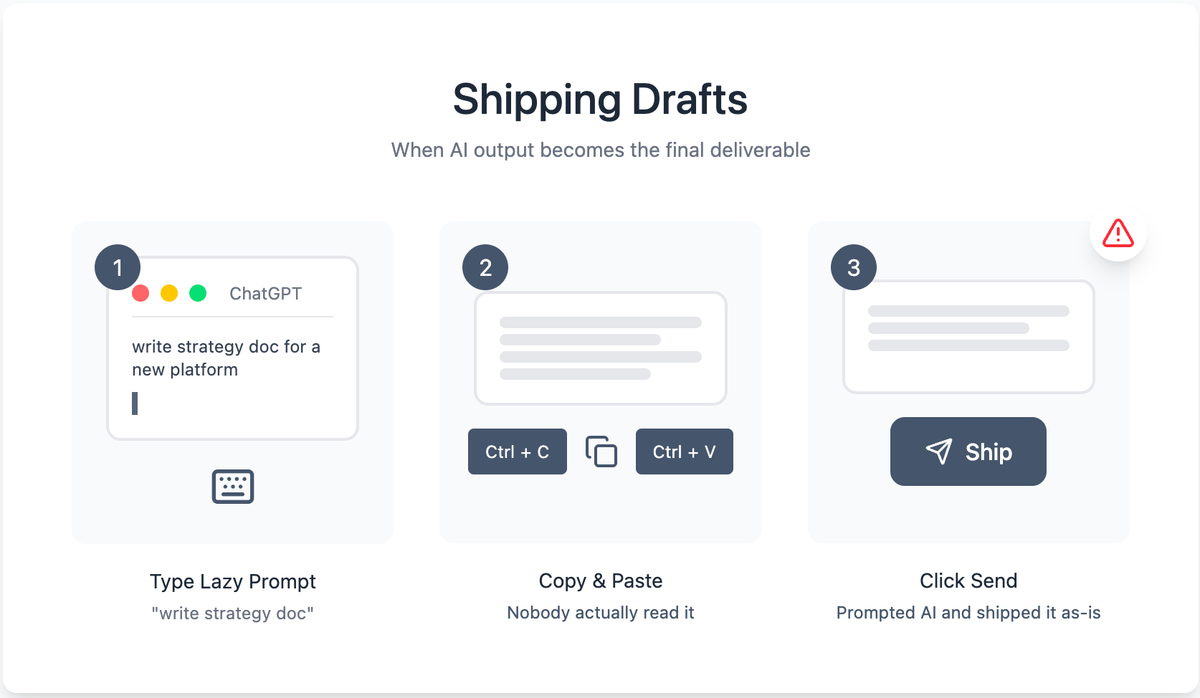
We are drowning in AI documents that nobody is reading.
I saw a 30-page strategy document recently. It was widely circulated and reviewed by multiple stakeholders.
But here is the catch: on page 10, it recommended "Phase 3" of a rollout, despite there being no Phase 1 or 2 in the plan. That "Phase 3" was clearly a thought borrowed from somewhere else because it had no meaning in the context of this document.
I kept reading the document and found a dozen mistakes both technical and structural, that would normally be caught.
Nobody caught them. Nobody corrected them.
Why?
Because nobody actually read it.
The author didn't read it - They prompted AI and shipped it as-is
The recipients didn't read it -
They scrolled to the end as fast as they could, skimmed the headers or asked AI to summarize it. Many probably thought,
"I’ll just ask & wait for the meeting where they read this to me."
Sounds like a familiar story, right?
We are in a weird moment.
AI is enhancing good work, but exacerbating bad work. It is making lazy workflows faster and louder.
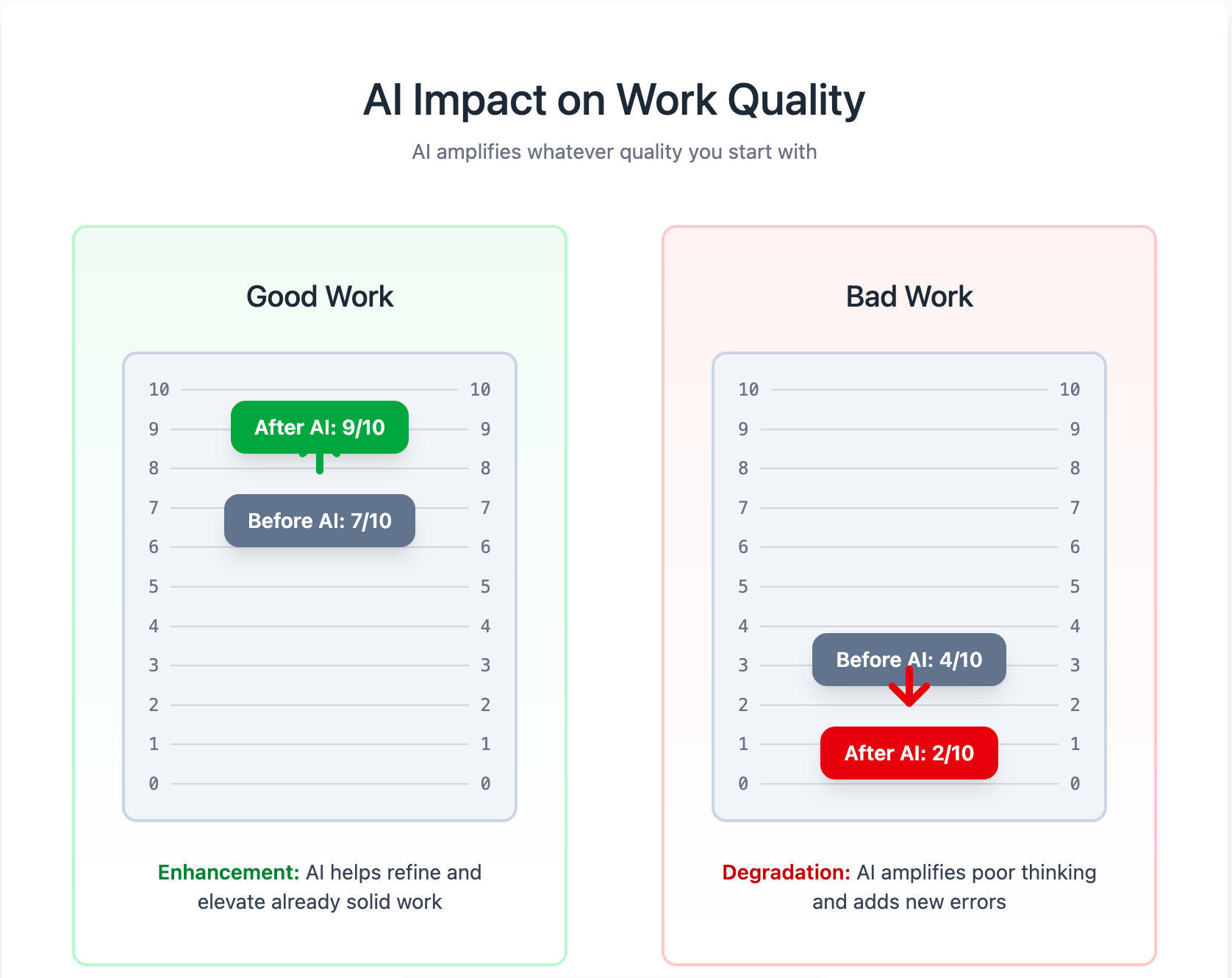
If we want to stop the flood of unread 30-page documents, we need to change how we work:
What needs to change?
- Write the substance, use AI for the polish.
Always write your own core document. Do the thinking yourself. Use AI to clean up the grammar, adjust tone, or fix formatting.
If you didn't think it, don't ship it. - Actually read what is sent to you.
If someone sends you a document, honor the work by reading it and providing specific feedback. If it’s AI-generated fluff, call it out. You can't be too busy to read a document before a meeting.
If somebody shipped it, then read it. - Use AI to summarize, not to replace.
Use AI to create tight summaries so your team gets the update quickly. Don't force them to read a novel just for a simple status check. Read and review your summary to make sure it aptly reflects the key points.
If you didn't read it, don't summarize it.
What can you do?
- Start with one: Pick one document this week to read fully before responding
- Read documents before meetings, not during. Come prepared to discuss, not to listen to a reading.
- Set Boundaries: It's okay to say "I need time to read this properly"
AI generates drafts, not final products.
Stop shipping the draft. Ship excellence.